How to Add a Business Phone Line to Your Cell Phone (and Who Answers It at 7pm)
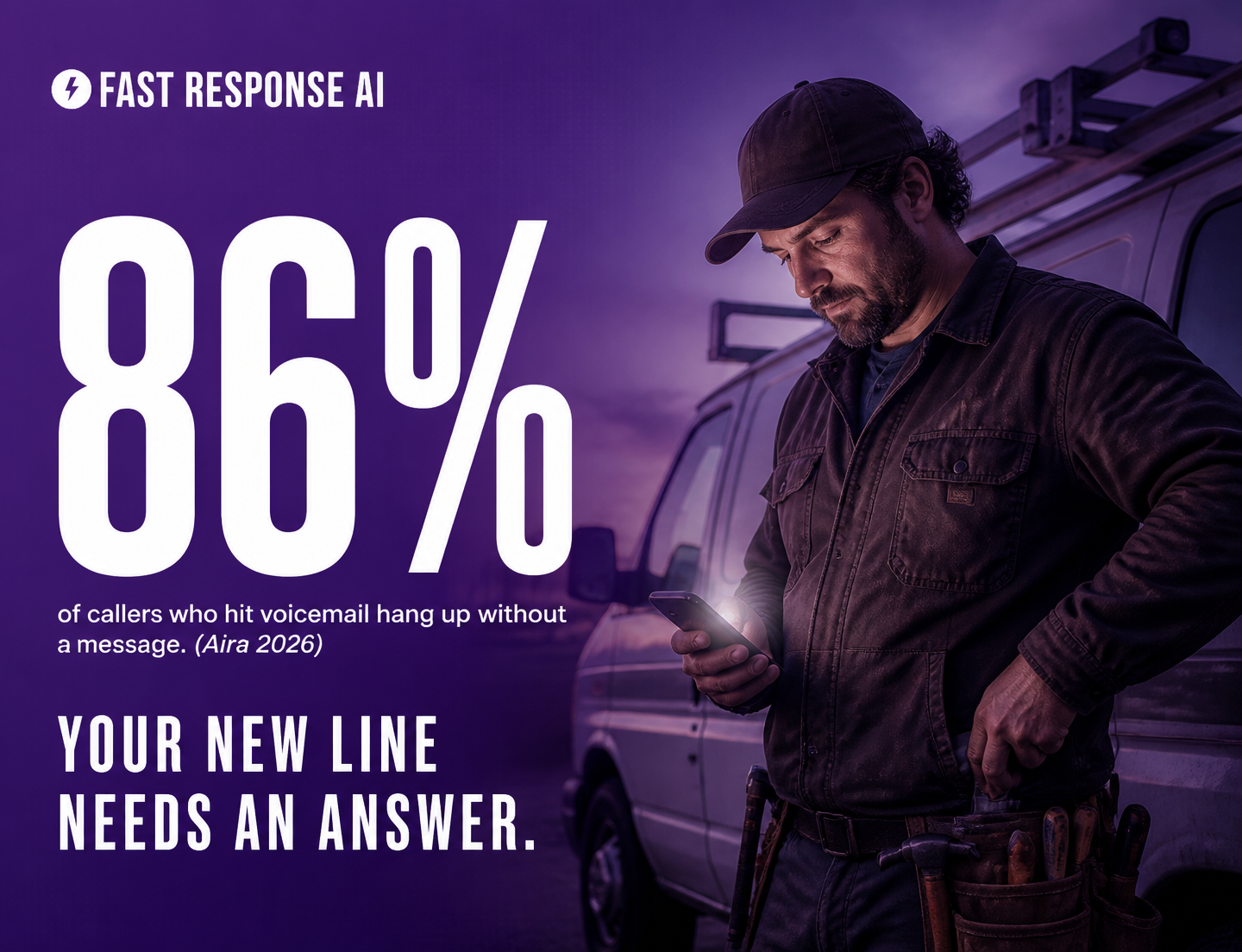
You can add a business phone line to your cell phone in about 10 minutes, no second phone required. Here is the number the setup guides skip: 86 percent of callers who reach voicemail hang up without leaving a message. Setting up the line is the easy half. Deciding who answers it is the half that pays.
Adding a business phone line to your cell phone means running a dedicated business number on the phone you already carry. A number app or carrier eSIM gives you just that: a number. A unified communications platform like Fast Response AI gives you a complete business line: calls, texts, and website chat in one inbox, answered by you when you can and by your AI agent when you cannot, starting at $29 per month.
Why Running Your Business on Your Personal Number Costs Real Money
If you are a plumber, an electrician, or a property manager running everything through one personal number, you know the symptoms. Customers screen your calls because your number shows up as unknown. You screen theirs because you cannot tell a new lead from a robocall. And when a dispute comes up, there is no clean record of who said what.
The money side is worse than the mess. Small businesses answer only 37.8 percent of their inbound calls (Aira, 2026), and the average small business loses an estimated $126,000 a year to calls nobody picked up. Every one of those calls carried real intent. The caller just could not reach the business behind the number.
A dedicated business line fixes the separation problem. It does nothing about the answering problem. Keep that distinction in mind through the steps below, because it is the whole decision.
How to Add a Business Phone Line to Your Cell Phone: 4 Steps
- Decide what you are actually buying. A number app or a carrier eSIM plan adds a second number to your phone. That solves caller ID and keeps your personal number private, and nothing else. A communications platform adds a full business line: the number, plus one inbox for calls, texts, and website chat, apps for your phone and laptop, and an answer for every contact. These are different products. Price-shopping them against each other is how owners end up with a cheap second number and the same missed-call problem they started with.
- Pick your number. Choose a local area code if your customers are local; trades and property management calls convert better from a recognizable local number.
- Activate and set the basics. Business hours, greeting, and texting. Texting matters: many customers reply to a text long before they redial.
- Decide who answers when you cannot. This is the step every guide skips, and the one that decides whether the line makes you money. Configure coverage before the first missed call, not after.
What Every Setup Guide Leaves Out: Day Two
Read the top guides on this topic and they all end the same way: congratulations, your line is live. None mention the same afternoon, when the new number rings while you are elbow-deep in a water heater or driving between units.
The new line misses calls at exactly the same rate your old one did, because the bottleneck was never the number. It was that you are one person, and the phone rings while you work.
The data on what happens next:
- 86 percent of callers who reach voicemail hang up without leaving a message.
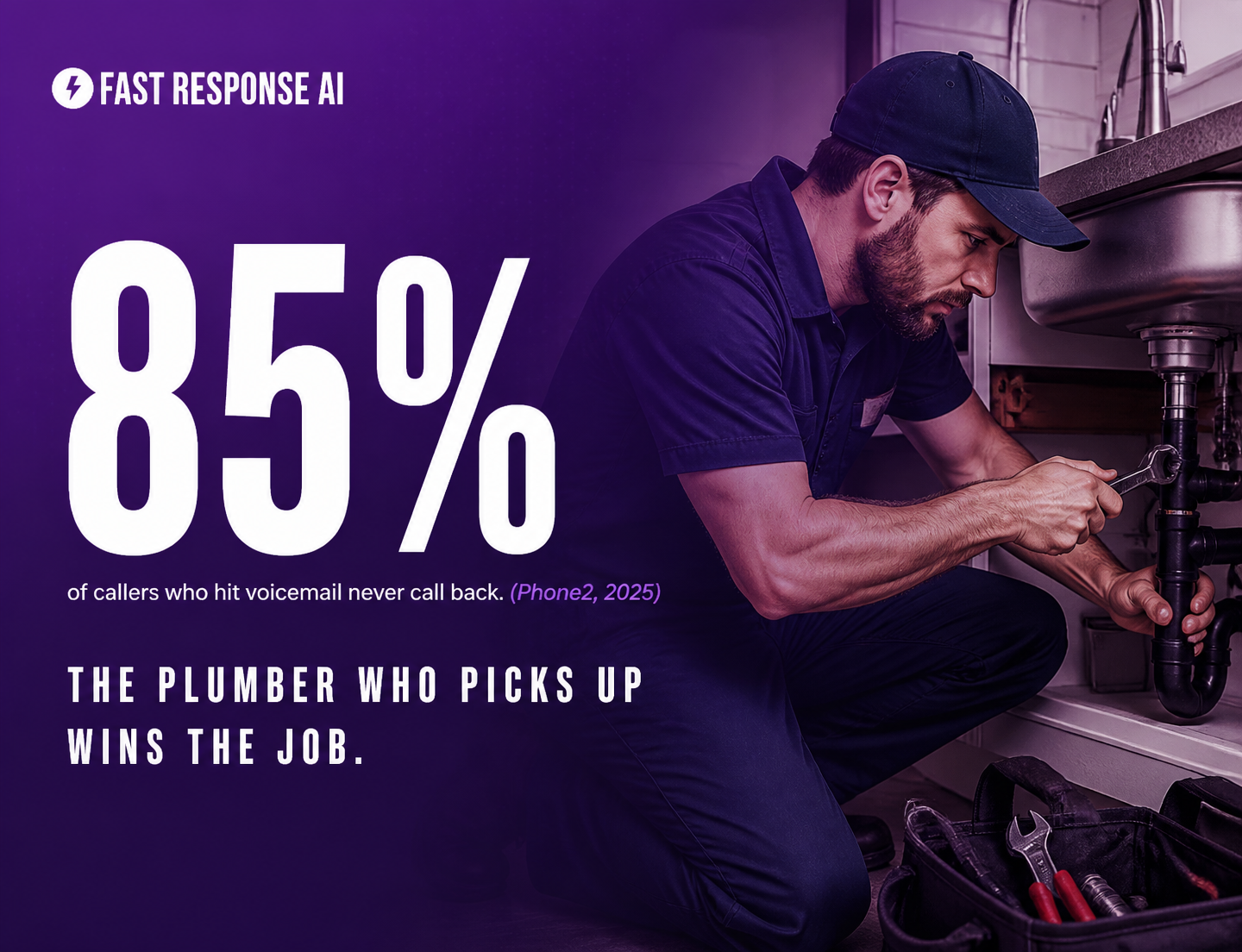
- About 85 percent of voicemail callers never call back.
- Roughly three quarters dial the next business on the list, often within minutes.
- Small businesses answer only 37.8 percent of inbound calls (Aira, 2026).
- Missed calls cost the average small business an estimated $126,000 a year.
Here is the line worth remembering: a business line without an answer plan is not a phone system. It is a second voicemail box with better branding.
So the question is not “which app gives me a second number?” It is “what happens to the 7pm call I physically cannot take?”
How the Best Operators Handle the Line They Just Added
Take a sprinkler repair operator who runs his business solo. No office manager, no dispatcher. When he set up his business line, he made one decision up front: no call would ever dead-end in voicemail.
He set himself up on Fast Response AI, no hand-holding, live in under 10 minutes. His calls, texts, and website chats land in one inbox. When he can pick up, he answers like he always has; the customer talks to him. When he cannot, his routing rule kicks in and his AI agent answers in his place, captures the job details, books the appointment when the calendar allows, and notifies him immediately. Every conversation, his and the AI’s, sits in one searchable log with full transcripts.
The 7:42pm call about a broken irrigation zone gets answered, in any of 29 languages. He reads the transcript over coffee, calls back already knowing the address, the problem, and the urgency, and starts the day with a job instead of a mystery voicemail. He stopped losing work to whoever picks up first, without hiring anyone.
That is the difference between adding a number and owning your communications. Plans start at $29 a month with the AI agent included, no contract, and a one-week free trial. It covers contractors, property managers, and any small business that lives by the phone. Full plan details are on the pricing page.
If you manage tenants instead of job sites, the stakes are higher: leasing and maintenance calls cluster after hours, exactly when nobody is at a desk. A property management setup can route everything after 6pm to the AI and hand you the full log in the morning.
Frequently Asked Questions
Can I have two phone numbers on one cell phone?
Yes. You can run a virtual number through an app, activate a second native line through your carrier via eSIM, or use a communications platform whose app carries your business line. Modern iPhones and Android phones support all of these on one device, so there is no second phone to carry.
How much does it cost to add a business phone line to a cell phone?
A bare second number runs from free to about $15 per month through number apps or carrier eSIM plans. A full business line with AI answering starts at $29 per month with Fast Response AI, which includes 250 voice minutes, 250 texts, website chat, and 30 AI answering minutes. The difference is what happens when you cannot pick up.
Do I need a separate SIM card for a business number?
No. App-based numbers work over your existing data connection with no SIM at all, and carrier second-number plans use the eSIM already built into most recent phones. Fast Response AI works the same way: your business line lives in the app on the phone you already own.
Is Google Voice good enough for a business line?
For a side project with very low call volume, yes. Businesses outgrow it because the free tier has no team features and no answer when you cannot pick up. If you miss a call, it goes to voicemail, and 86 percent of voicemail callers hang up without leaving a message.
What happens if I miss calls on my business line?
Statistically, the caller disappears: about 85 percent of voicemail callers never call back, and most dial a competitor within minutes. This is why coverage matters more than the number itself. With Fast Response AI, your AI agent answers the calls you cannot take, captures the request, books the appointment when possible, and sends you the transcript.
Does Fast Response AI use live human agents?
No. The only humans involved are you and your team. There are no third-party agents picking up your calls. When you cannot answer, an AI agent answers in your place. This keeps your customer relationship direct, your data in your platform, and your costs predictable.
Ready to stop losing jobs to voicemail? Start your free trial at fastresponse.ai. Live in under 10 minutes, no contract.