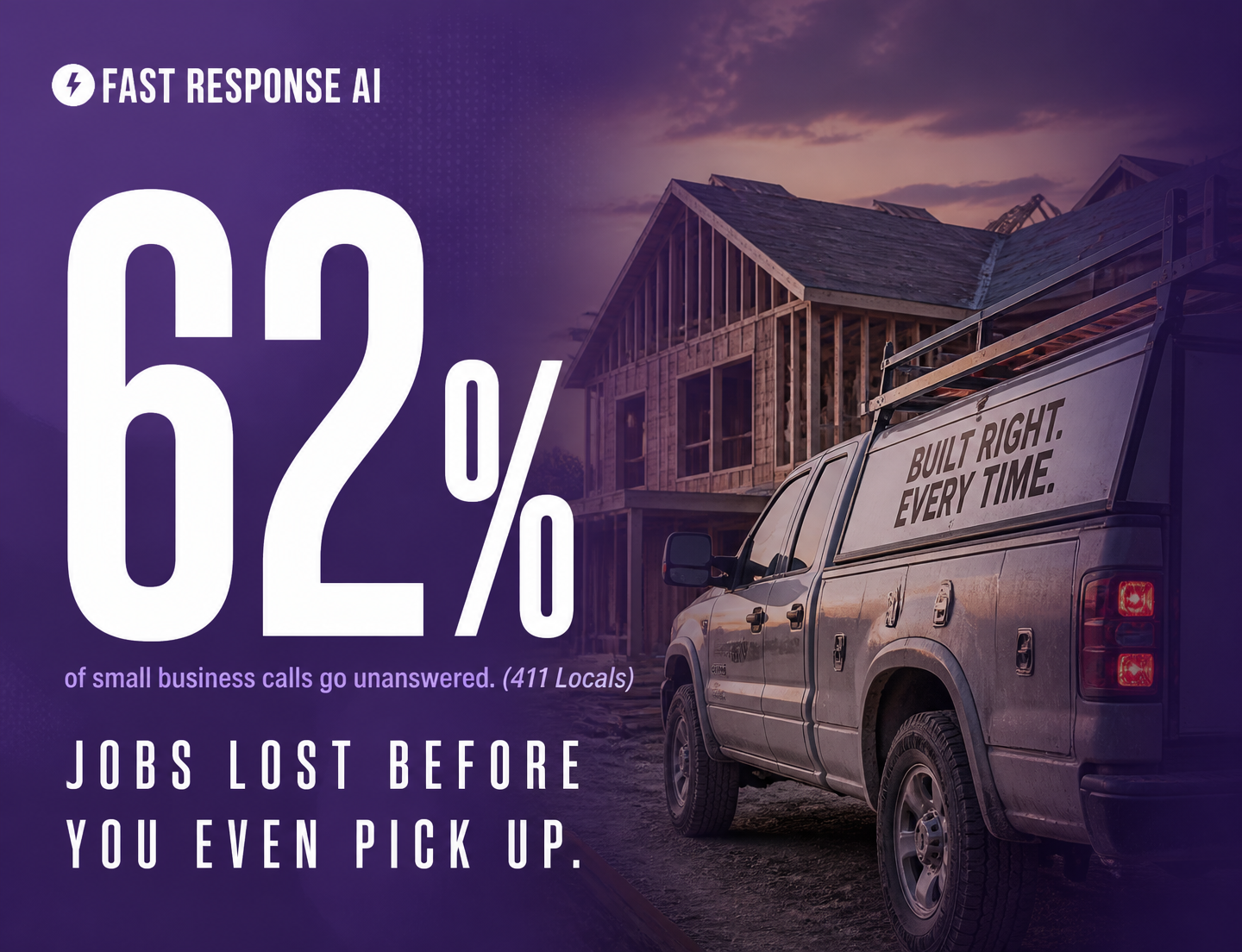
Sixty-two percent of calls to small businesses go unanswered, and 85 percent of those callers never try again. We have handled inbound calls in 29 languages for a 150-unit property manager and a solo sprinkler-repair operator, and the pattern is identical: small businesses do not lose to better competitors, they lose to faster phones. If you have researched an AI voice agent and come away more confused than when you started, this guide is the plain-English version.
An AI voice agent is software that answers your business phone in a natural-sounding conversation, understands what the caller wants, and either handles the request or routes it to you. The best AI voice agent platforms sit inside the same inbox where you and your team already work, so you stay in the conversation when you can pick up. For a small business owner, an AI voice agent is a safety net for the calls you cannot answer yourself, not a replacement for you.
The problem is not your phone, it is your calendar
A plumber in Bakersfield gets 18 inbound calls on a normal Tuesday. He answers seven. The other eleven hit voicemail somewhere between a crawl space and the I-5. Two of those eleven were emergency reroutes from a property management company that needed someone in the next 90 minutes. By the time he drives back to his truck and checks voicemail, the PM has already called the next plumber on the list.
This is not a phone problem. The plumber’s phone works fine. This is a calendar problem. He is one person. He cannot be elbow-deep in a sink trap and on a sales call at the same time.
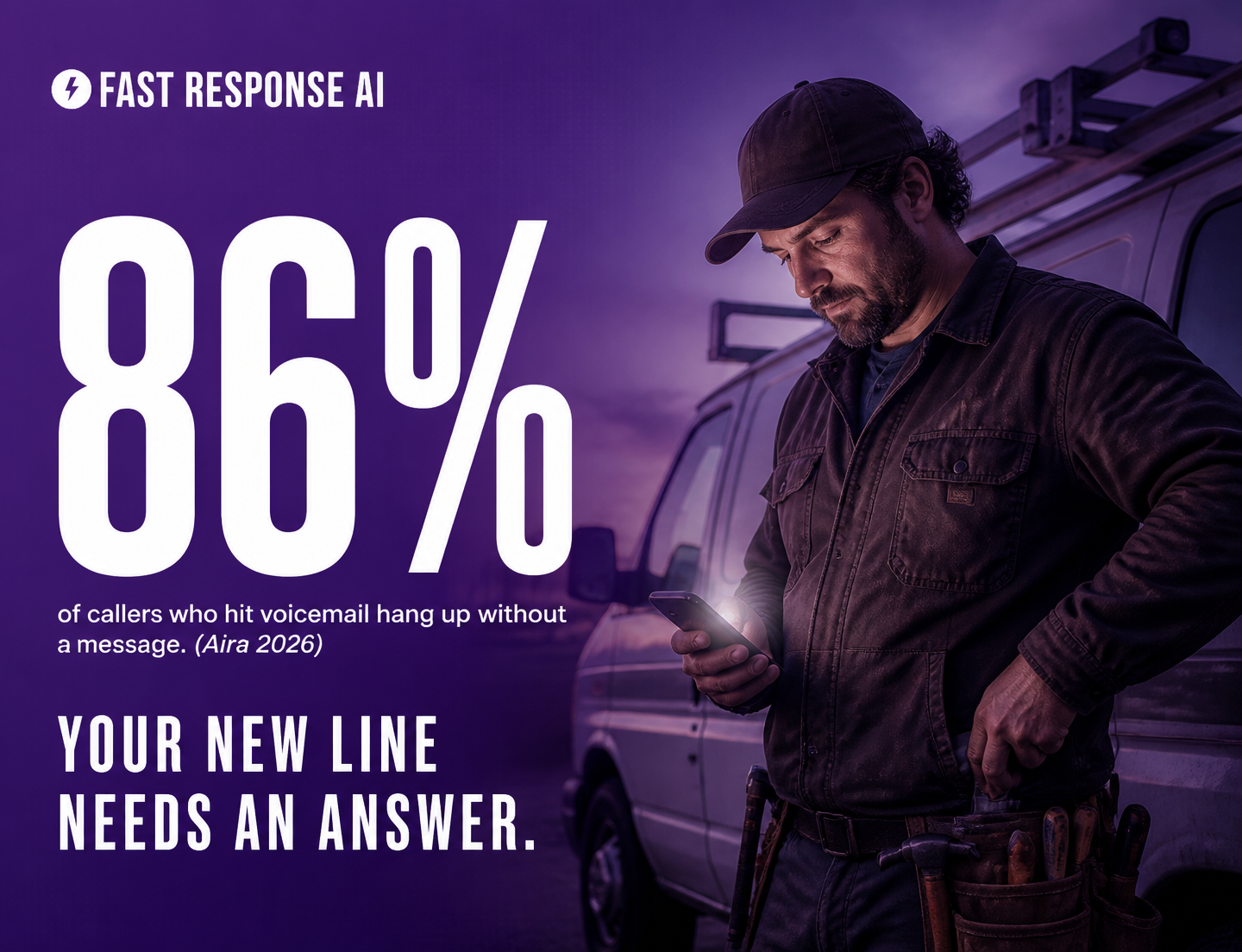
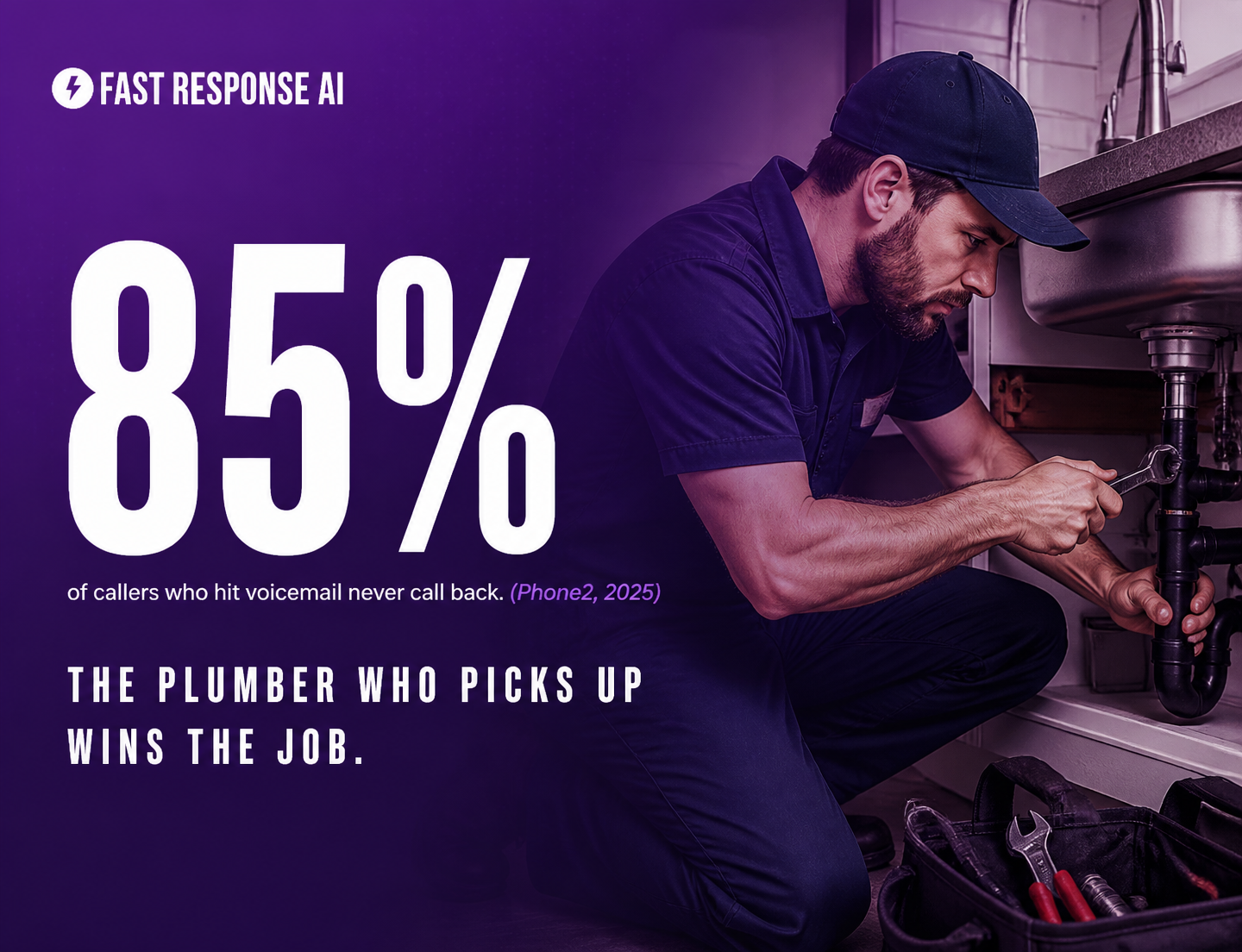
For roughly 60 to 80 percent of inbound calls in home services, this is the default outcome. One study of 347,609 real business calls put the annual cost in missed leads at $16,800 to $252,000 per business, depending on volume and ticket size. A separate survey found that 42 percent of small businesses estimate they lose at least $500 every month to missed calls. The number that hurts most is the simplest one: 85 percent of callers who hit voicemail never call back.
A working AI voice agent does one thing very well. It picks up when you cannot.
What most people get wrong about an AI voice agent
The marketing for this category is a mess. Vendors call themselves “AI receptionists,” “live answering services,” “AI plus human hybrids,” and a half-dozen other things that all sound similar. Most of them are not the same product, and a few of them are actively the opposite of what you want.
Here are seven facts a small business owner should know before signing anything.
- An AI voice agent is software, not a service. There is no third-party human picking up your phone. The conversation happens between your caller and your AI.
- Speech recognition and large language models are now good enough to handle 85 to 95 percent of routine inbound calls at a quality level callers cannot reliably distinguish from a human.
- An AI voice agent does not dispatch your subcontractors or vendors. It captures the request, applies the routing rules you set, and notifies you. You decide what happens next.
- Cost for a small business runs roughly $75 to $225 a month at 500-call volume, which is 70 to 85 percent less than the equivalent live answering service.
- The biggest variable in whether the product “works” is not the AI. It is whether the business owner actually configures the routing. The customers who get value send specific call types to AI on specific schedules. The customers who set nothing gets nothing.
- AI voice agents that share an inbox with your team beat AI voice agents that run on a separate dashboard. You want one place to see calls, texts, chats, and transcripts. Not two.
If a vendor’s pitch fights any of those six facts, take a careful look at what you are actually being sold.
How a working operator deploys an AI voice agent
The 150-unit property manager who runs on Fast Response AI is a useful case study, not because the product is unusual, but because the configuration is straightforward enough that any owner could copy it.
Our PM kept their office line and staff answering calls between 9 a.m. and 5 p.m. After 5 p.m., calls roll to the AI. The AI greets the caller, identifies the property, asks whether the issue is a leasing question, a maintenance request, or a current-tenant question, captures the relevant details, and sends a text to her on-call team. If the caller says “water” or “fire” or “no heat,” the AI flags the call as urgent and pages the on-call manager directly. Every conversation, AI or human, lands in the same inbox, with a transcript, a timestamp, and a search bar. AI is there picking up calls, texts or chats they would otherwise miss, capturing the information needed to act, and getting out of the way.
The sprinkler-repair operator runs the same product with one routing rule: AI answers everything, all the time. He calls customers back from the transcripts notifications when he gets off a job. No staff. No office. No software anyone helped him configure. The point of including this guy is that the product is operable by a non-technical sole proprietor. If you can forward your phone, you can run an AI voice agent.
That is the identity the right AI voice agent buys you. You stop being the operator who loses jobs to whoever picks up first. The 7 a.m. pipe-burst call gets answered. You see the transcript on your phone before you finish your coffee. You call the customer back yourself, on your time, on your schedule.
How to evaluate an AI voice agent
Five questions sort the field quickly.
First, is voice the only channel? Most inbound traffic in 2026 is multi-channel. The same prospect texts you on Monday, calls you Tuesday, fills out a web form Wednesday. If your AI voice agent cannot see the text and the chat, half the context is missing.
Second, do human calls get the same treatment as AI calls? When you can pick up the phone, AI should be there to keep those calls organized. If you only see AI handled calls but not your own then as a business owner you only have half the picture.
Third, what is the routing logic you control? named-contact override, keyword urgency flags. These are table stakes. If the vendor pushes back when you ask, the product is less configurable than the website implies.
Fourth, what is the contract? If they don’t have a Free trial, the product may not be as good as they claim. Beyond that, anything longer than month-to-month is the vendor protecting their churn, not your business.
The best fit for a US small business in home services or property management is a unified communications platform priced flat, with a 10-minute setup, no contract, and the AI as a safety net under your inbox. The contractors page and the property managers page describe the routing configurations that most operators land on in the first week and we even have a 1 week free trial!
Frequently Asked Questions
What is an AI voice agent in plain English?
Does an AI voice agent use live human agents?
Can an AI voice agent dispatch a plumber or HVAC technician on my behalf?
How much does an AI voice agent cost?
How long does setup take?
Can an AI voice agent really handle calls in other languages?
Ready to stop losing jobs to voicemail? Start your free trial at fastresponse.ai. Live in under 10 minutes, no contract.