A $100 pricing mistake doesn’t sound like much. Multiply it by 12 months and that’s $1,200 handed to your tenant every year. Or, if you priced too high, weeks of vacancy that cost you more than any rent bump ever would have recovered. We’ve handled leasing calls for property managers running 150+ units, and mispriced rentals are behind more unnecessary vacancies than anything else. This guide walks through what goes wrong, what the best operators do differently, and how a rental price estimator built on live market data changes the math.
The Vacancy Math Nobody Talks About
Picture this: a property manager in Phoenix prices a 2-bed apartment at $1,650 because a popular online tool told her that’s market rate. In reality, units in that ZIP code with in-unit laundry and gated parking are clearing at $1,820. Over a 12-month lease, that’s $2,040 left on the table, silently, every year.
The reverse mistake is equally costly. Price at $1,950 ($130 above the real ceiling) and the unit sits for five weeks while she fields one unqualified inquiry. At $1,820/month, that vacancy alone wiped out $2,275 before she dropped the price back to reality.
Neither mistake is about carelessness. Both are about using a rent estimate calculator that’s working from stale data. Most tools compare your unit to what rented, not what’s renting. That distinction is everything in a market that shifts quarter to quarter.
What Most Rental Price Estimators Get Wrong
Here’s the counterintuitive truth most property managers discover too late: the biggest platforms have the most data and the least useful numbers for your specific unit.
Zillow, Rentometer, and similar tools are built on large aggregated datasets however none of them account for amenities like a pool, parking or pet-friendliness which does impact the value of the rental.
A second problem: historical vs. active comparables. Most tools default to properties that rented in the past 6w–18 months. In a rental market that’s moved 6–8% in either direction since then, you’re flying with a map from a different city.
How Operators Running Tight Portfolios Actually Price Units
A property manager running 80 units in Dallas put it plainly: “I stopped using Zillow for pricing two years ago. I kept watching identical units in my ZIP code lease for $150 more than my estimate. The tool wasn’t wrong for the ZIP. It was wrong for my unit.”
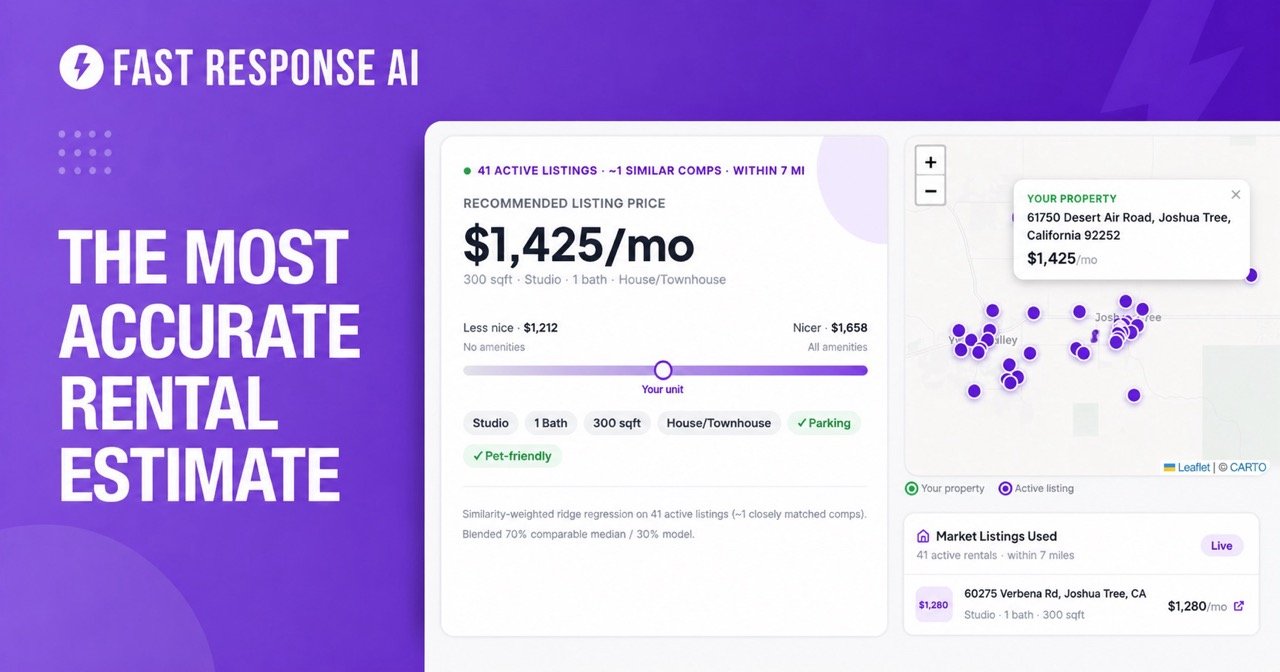
What the best operators have figured out is to run pricing from active listings, adjusted for the specific features of the unit, not averaged across the whole ZIP code. That’s the approach behind Fast Response AI’s free rental price estimator. Enter the address, property type, bedroom and bathroom count, square footage, and amenities. It pulls live market data and returns a recommended price range (not a single number, because the range is where the strategic decision actually lives).
The right number depends on your vacancy tolerance, your lease start window, and how quickly comparable units in your area are moving. The estimator gives you the floor and ceiling so you can make that call yourself, in under a minute, for free, with no account required.
For property managers tracking multiple ZIP codes, the tool also offers a free monthly rental market report subscription. Enter the ZIP codes you manage and get updated market data delivered to your inbox.
What Happens After You Price It Right
Here’s where most of the revenue actually walks out the door.
Over 60% of calls to property management companies go unanswered. A Harvard Business Review study found that leads who don’t get a response within 5 minutes are 80% less likely to convert. Price your unit correctly, watch the inquiries start coming in, and then miss the 7pm call on a Tuesday, or the Saturday morning ring during your back-to-back showings, and all that pricing work means nothing.
The property managers who run the tightest leasing operations price from live data and then make sure every inquiry that follows actually gets answered. That’s the full picture. A correct price drives the call. An answered call closes the lease.
For anyone who wants to make sure the second half of that equation is covered, Fast Response AI handles inbound leasing calls 24/7, qualifying prospects, booking showings, and sending follow-up texts automatically, so you’re never the operator who loses a lease to voicemail at 8pm on a Sunday.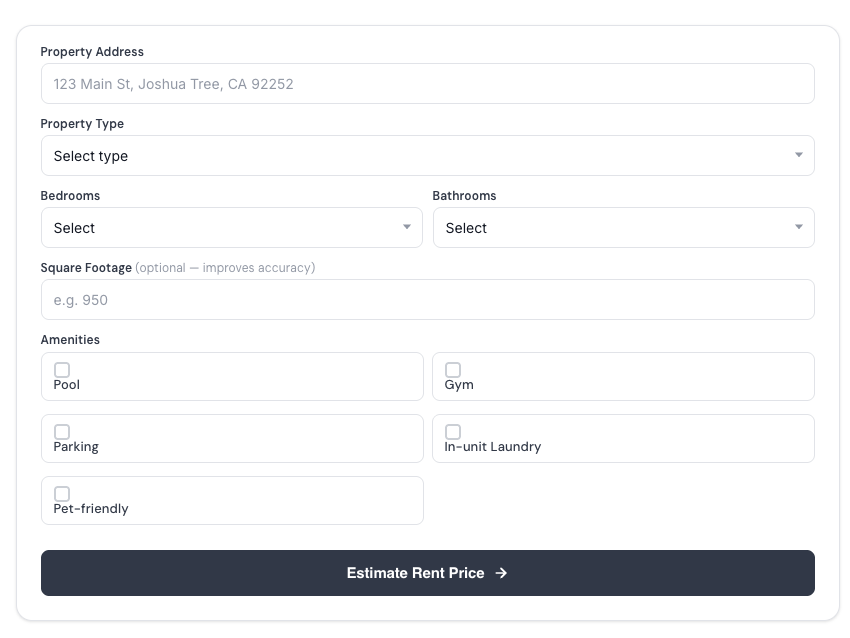
Frequently Asked Questions: